Upper Structure Triads and Polychord Voicings
Introduction
In this lesson, we'll be looking at a new harmonic voice technique of combining two simple chords to create a bigger and richer sound. These are known as polychords. We'll first learn the basic vocabulary of polychord voicings and then see how these are used in contemporary compositions. Polychords are also used in classical music, but are also known as "tall-chords" because of how they look on the staff. We'll learn how classical composers have been using polychords in their compositions. In Composers on Composing we'll be asking how they use form in composition.
So, let's get lesson 7 started!
Objectives
By the end of the lesson, you will be able to:
understand the concept of upper structure triads, and derive upper structure triads from chord scales
use upper structure triads to create extended chord voicings
recall a basic vocabulary of polychord voicings for use in realizing chord progressions
understand the concept of "tall" chords involving the 9th, 11th, and 13th in the context of nineteenth- and twentieth-century classical music
understand and comment on how a selection of professional composers use polychords and extended tertian harmonies
Extending the Limits: Exploring Upper Structure Triads

Lego Bricks
You've probably heard the expression "the whole is greater than the sum of its parts." In this topic we'll learn to create rich and vibrant chord voicings by combining pairs of familiar chords. The result will be hip, sophisticated sounding voicings that can be used for maximum effect!
Jazz Voicings:
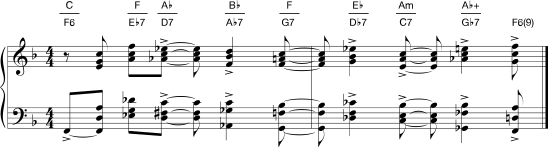
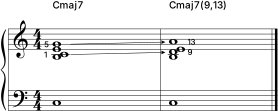
Up until this point we have used tension substitution in four-way close voicings as a strategy for building chord voicings.
Cmaj7 in Four-Way Close Spacing, with and without Tension Substitution:
This topic will explore another approach to building chord voicings that include tensions: the polychord.
Polychord voicing of G7

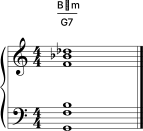
Polychord voicings consist of a lower structure that contains only chord tones of the basic function and an upper structure triad or 7th chord drawn from its chord scale. The upper structure contains at least one tension. Harmonic avoid notes are not included in either structure, for obvious reasons. Polychord construction offers the conceptual advantage of combining two easily understood objects to create something richer and more resonant. The example above depicts a polychord voicing of a G7
Identifying Upper Structure Triads
The Tonic Chord
Let's create a polychord voicing for Imaj7 in the key of C. The lower structure will consist of the chord tones of Cmaj7—the complete chord, the essential notes: 1, 3, and 7 or 1, 3, and 6 (if we employ an upper structure that includes chord tone 7). Now we need to select a triad from the chord scale that contains at least one available tension and no harmonic avoid tones. This eliminates any triad that contains the avoid tone S4. So, D-, F, and Bº are not options.
Triads with Avoid Tones Eliminated:

Of those remaining, C and E- offer no tensions, but G contains T9. Its remaining tones are the 5th and 7th of the lower structure, so a G triad is a good choice for an upper structure triad in this situation.
Polychord Voicings of Cmaj7:
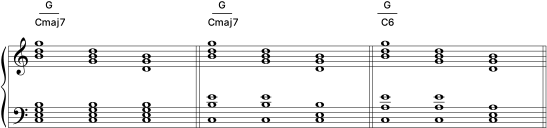
The upper structure triad can be positioned as desired. Omitting the 5th from the lower structure makes the overall sonority of the voicing clearer and less dense. If one uses C6 as a lower structure, adding a G triad as the upper structure yields the chord: Cmaj7 (13, 9).
A- also seems a viable choice for an upper structure triad as it contains 13, but the fact that it contains the root of the lower structure makes it problematic. If its 3rd is positioned anywhere other than a half step above the lower structure, it creates the interval of a minor 9th with the 7th of the chord:
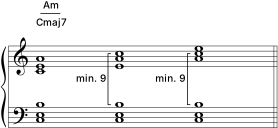
As you'll recall from earlier chapters, this is generally deemed too dissonant to work on a tonic function chord.
All in all, the triad built on scale degree 5 of the Ionian chord scale is the best upper structure for a polychord that expresses Imaj7.
The IV chord
The Lydian chord scale offers a number of viable upper structures for the IV chord.
Triads of F Lydian:

The G triad includes all three available tensions 9,
Polychord Voicings for IVmaj7 in the Key C:
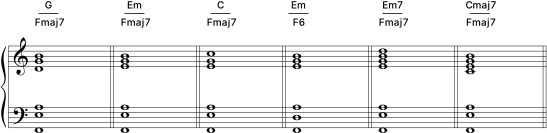
Of the possible upper structures, the triad built on scale degree 2 of Lydian is often the most effective, as it contains all three tensions from the Lydian scale.
Upper Structures for Minor 7 Chords
Upper Structures for II-7 Are Built on 5 and

The Dorian chord scale has two triads that are applicable as upper structures. Discounting the triads that contain the harmonic avoid note S6 and those that only replicate chord tones, the triads built on scale degrees 5 (T9) and
Upper Structures for VI-7 Are Built on 5 and

Because of the placement of S
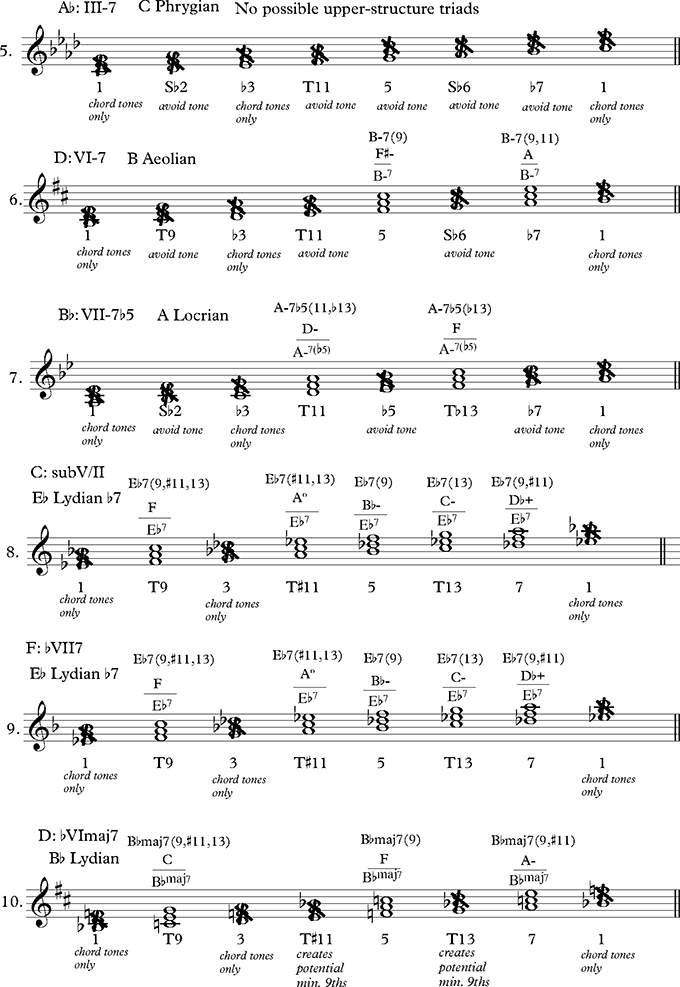
The Phrygian Scale Yields No Upper Structures for III-7:

Upper Structures for the Dominant
By now, you should have a pretty clear idea of how the process for selecting upper structure chords works. Upper structures don't contain harmonic avoid tones and must contain at least one tension. For each situation, you should investigate the chord scale appropriate to the chord's function, using these principles to make your selection.
Since the Altered Dominant Scale presents all of the possible chromatic alterations for the V7 chord, it is rich with upper structure options for dominant function chords.
Upper Structure Triads from the Altered Dominant Scale:

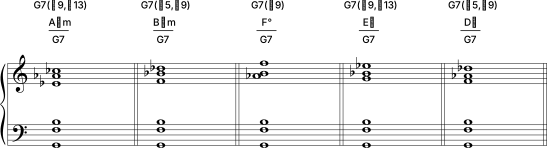
The triad built on T
Polychord Voicings for G7 Altered:
Polychord Summary
Here's a summary of polychords:
Polychords are voicings with tensions in the upper structure grouped as triads or 7th chords above the essential chord tones of the lower structure
Harmonic avoid tones are omitted from the voicing
The lower structure may be in close position or spread
The upper structure tones may be close-voiced, inverted, or spread as desired
The perfect 5th is often omitted, but can be included if it does not interfere with tensions such as
The upper and lower structures should be separated by at least the interval of a third
-
Polychord voicings are expressed as an upper structure chord symbol over the lower structure chord symbol, separated by a horizontal line

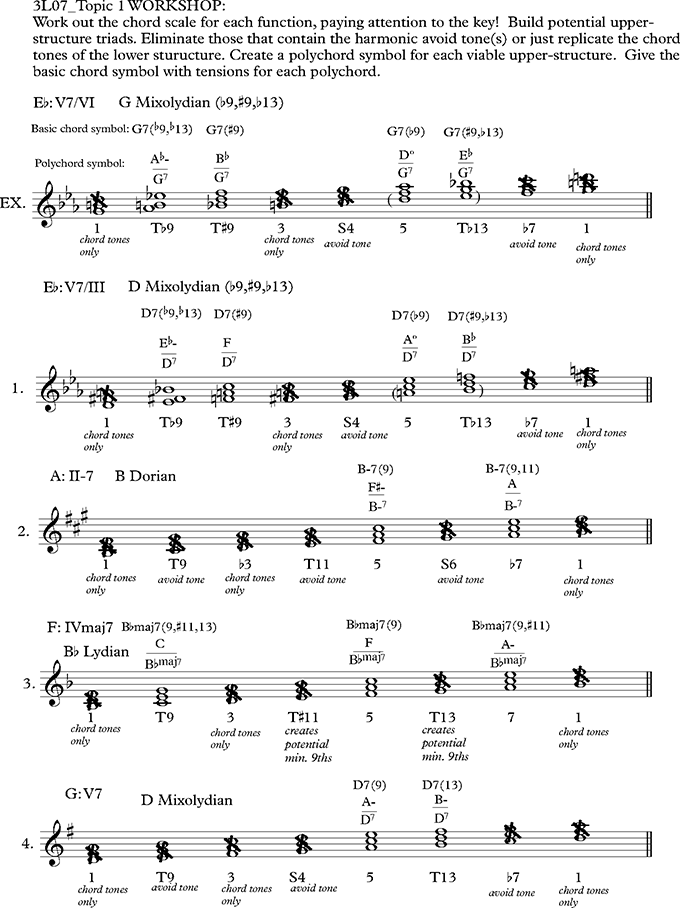
Workshop: Upper Structure Triads
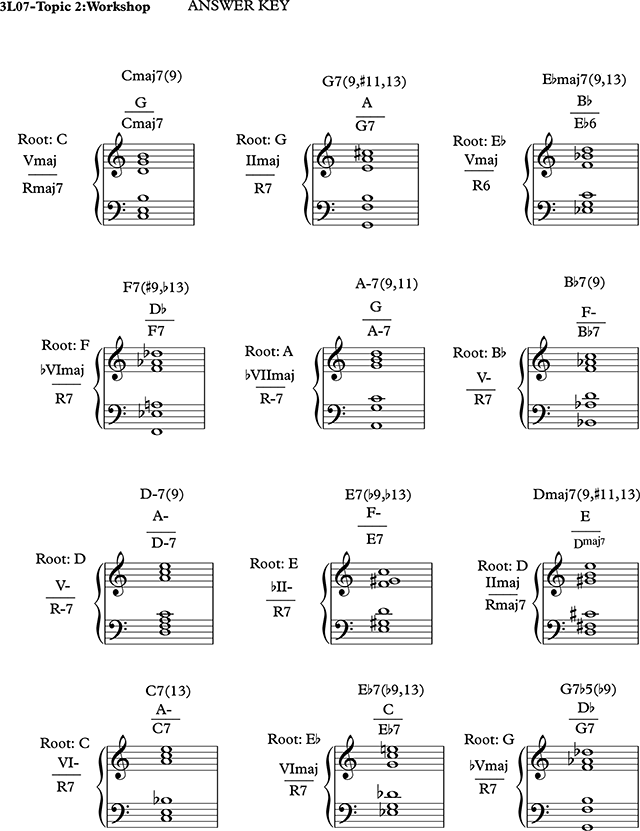
Download the attached PDF. Write the chord scale for each function and then work out its viable upper structure triads. Give a polychord symbol combining the lower structure and each upper structure. Identify the actual chord that each polychord voicing represents, giving tensions in parentheses. Check your answers against the answer key provided.
Download Upper Structure Triads workshop (PDF)

This Over That: Building a Vocabulary of Polychords
If a + b = c and a + 2 = 3 then a = 1
Using letters to stand for numerical values can help us to understand mathematical principles. We have seen time and again in our work with theory how the application of numbers to pitches can help us to commute certain different relationships from key to key. In this topic we'll apply this principal to the task of acquiring a basic vocabulary of polychords that we can use for practical purposes.
In the last topic we introduced the idea of polychords (upper and lower structure) as a new way to construct voicings that include available tensions. We mined chord scales, looking for viable upper structure triads to use in their construction. The scales offer up numerous colorful options, but the process of scale mining is time consuming. In order to start you on the road to an understanding of the practical use of polychord voicings, it's probably best if we limit our choices to some of the most commonly used upper structure triads. This topic will deal with the idea of developing a basic practical vocabulary of polychords that expresses the most common harmonic functions—tonic, subdominant, dominant, secondary dominant, substitute dominant, and modal interchange. We'll use numerical relationships to commute those polychords from key to key.
Polychord Construction, Major 7 Chords
First off, let's review the process that we learned in the last topic and see where it leads in establishing a limited vocabulary. Let's mine C Ionian for the best polychord voicing that will express Cmaj7.
-
Our first round of elimination involves any triad that contains the vertical avoid tone S4.
Ionian Triads with S4 Eliminated:
-
After the triads that contain avoid tones have been identified, we want to eliminate any triad that just replicates the chord tones of the lower structure—C, E, G, B. This eliminates two more triads: C and E-.
Triads that Replicate Chord Tones also Eliminated:
-
This leaves two triads still in the running that fit our basic criteria. G and A- do not contain the avoid tone S4 and each contain at least one available tension. G replicates chord tones 5 and 7, and adds T9. A- replicates chord tones 1 and 3, and adds T13. As you may recall from the last topic, the A- triad was somewhat problematic in constructing a polychord because in most positions its 3rd creates an overly dissonant minor 9th with the 7th of the lower structure.
3rd of A- Creates Minor 9th with 7th of Lower Structure:(missing audio)So while usable in some limited situations, the A- triad is not the most suitable, all-purpose upper structure triad for a Cmaj7 polychord. That leaves us with the triad built on scale degree 5 of the chord scale: G. It sounds acceptable in all positions and adds T9 to the sound of the voicing.
G over Cmaj7 Polychord: Cmaj7(9):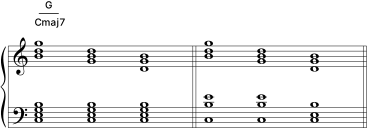 (missing audio)
-
Another important available tension (T13) can be added to the voicing by choosing the lower structure C6. The third voicing in the below example in particular, with its internal stack of three perfect 4ths, is very distinctive and strong.
G over C6 Polychord: Cmaj7(9,13):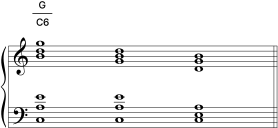 (missing audio)
This upper structure major triad when applied to lower structures maj7 and maj6 a perfect 5th below can be used in any situation where a maj7 chord is called for—tonic, subdominant, or modal interchange! Because of this versatility, it would be good for us to have a formula that allows us to transpose this polychord combination to any root. Transposing solely by note names can be both difficult and time-consuming. We have seen time and again that numerical relationships can be used to transpose scale tones, intervals, and chords from one musical situation to another easily. Let's do a little chord algebra. Don't worry. It won't be too complicated!
-
Since the root of the lower structure of any polychord voicing determines its musical address, let's use the letter R to stand for that root. So in our little system, Rmaj7 and R6 will stand for any maj7 or maj6 chord serving as a lower structure in a polychord voicing. Now we need a way to indicate the relationship of the upper structure to that of the lower. In the all of the voicings in the two previous examples, the root of the upper structure triad G was a perfect 5th above the root of the lower structure C. Since we are accustomed to using Roman numerals to stand for chords, let's call that upper structure Vmaj—for a major triad a perfect 5th above the root of the lower structure. The next example shows this numeric relationship played out in polychord voicings of Cmaj7, E
Vmaj over Rmaj7 and Vmaj over R6 in Three Transpositions: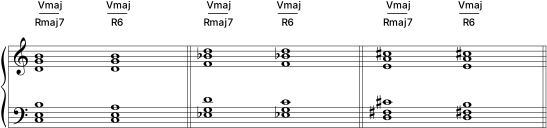 (missing audio)
Once we understand this concept, we can use this formula to build a polychord voicing for any maj7 chord without having to resort to scale mining!
Upper Structure Triads from Lydian
Let's turn to the Lydian scale for a moment. While the formulas we came up with in the preceding paragraph will reliably give us a polychord voicing for a maj7 quality, neither includes T
Upper Structure Triads from Lydian that Include T
The previous example shows three triads that include T
IImaj over Rmaj7 in Three Transpositions: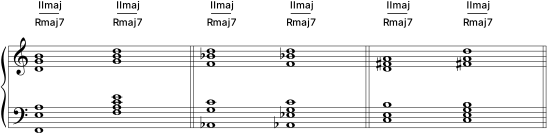 (missing audio)
Maj7 Chord Summary
In summary, any maj7 chord may be voiced as a polychord with the formula Vmaj over R6 or Rmaj7. Maj7 chords that are best expressed with a Lydian chord scale (such as IVmaj7 and modal interchange chords that are maj7 in quality) will use the formula IImaj over Rmaj7.
Vmaj over Rmaj7 = maj7(9)
Vmaj over R6 = maj7(9,13)
IImaj over Rmaj7 = maj7(9,
Polychord Construction, Minor 7 Chords
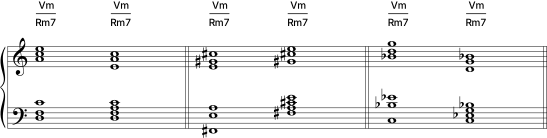
The most common available tension for minor 7 chords is T9. The formula V- over R-7 will create a polychord that includes T9.
V- over R-7: Voicings of D-7, F
T11 and T9 can be incorporated into a min7 polychord with the formula
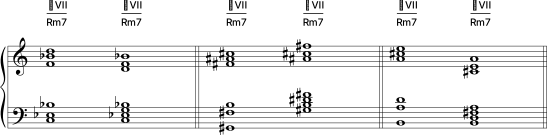
These two formulas will cover almost every situation where a min7 chord is called for. III-7 with its Phrygian chord scale is somewhat problematic. As you'll recall from the last topic, the Phrygian chord scale has two avoid notes—S
Likewise, the VII-7
Minor 7 Chord Summary
In summary, any min7 chord may be voiced with an upper structure of V- or
V- over R-7 = min7(9)
Polychord Construction, Dominant 7 Chords
For Dominant 7 chords that are expressed by a Mixolydian chord scale, there are two upper structures: VI- and V-. VI- adds T13 and V- adds T9. These would be appropriate upper structures for V7 and V7/V in a major key.
VI- over R7 and V- over R7: Mixolydian Polychords:
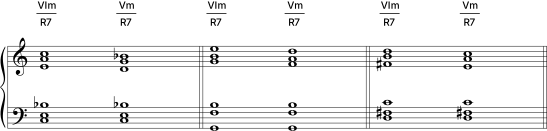
These two formulas are also often heard in I7, IV7, and V7 voicings in the blues.
For secondary dominant chords that have a minor target chord: V7/III, V7/VI, and V7/II, the Mixolydian (
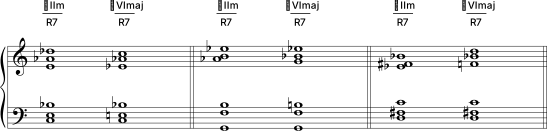
There are two more important upper structures to mention for dominant function chords. The first is the altered dominant scale (see below).
The Altered Dominant Scale . . .

. . . offers
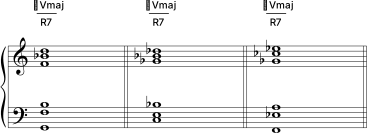
The symmetric dominant scale offers many triadic possibilities . . .

. . . and is often represented by VImaj over R7, which yields the tension combination T
VImaj over R7: dom7(
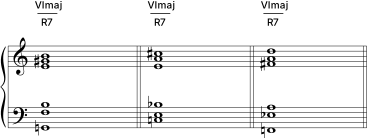
These polychords are particularly effective for enhancing the expectation of resolution of the V7 chord to I.
Dominant 7 Chord Summary
VI- over R7 = Dominant 7(13)
V- over R7 = Dominant 7(9)
VImaj over R7 = Dominant 7(
Polychord Construction, Substitute Dominant Chords
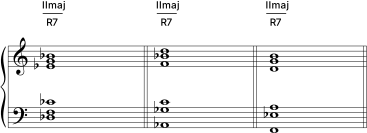
Substitute dominants are expressed by the Lydian
IImaj over R7: Lydian
Investigating each of the chord scales for interesting upper structure chords is important work for composers. Finding just the right combination can help you to define your personal style. This system of polychord formulas leaves us with 12 possible combinations that will create viable voicings for the most common functions in major key, minor key, and blues tunes. So commit them to memory!
Final Summary of Polychord Formulas
Vmaj over Rmaj7 = Maj7(9)
Vmaj over R6 = Maj7(9,13)
IImaj over Rmaj7 = Maj7(9,
V- over R-7 = min7(9)
VI- over R7 = Dominant 7(13)
V- over R7 = Dominant 7(9)
VImaj over R7 = Dominant 7(
IImaj over R7 = Dominant 7(9,
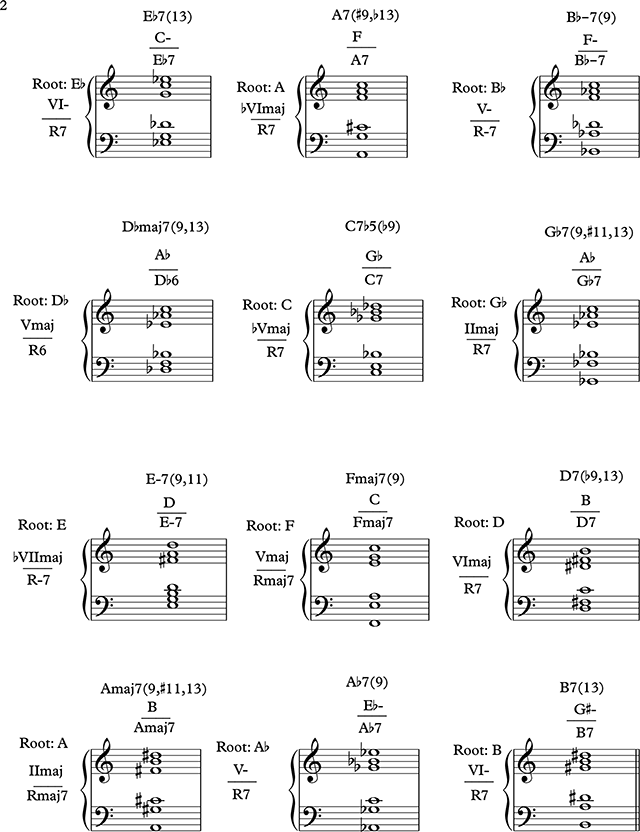
Workshop: Polychords
For this workshop download the attached PDF and do the following:
Give a polychord symbol for each of the formulas, using the given root
Voice each upper structure over the given lower structure
Identify each of the polychords with a standard chord symbol that includes tensions in parentheses
Check your answers against the answer key provided
Download Polychords workshop (PDF)
Building the Tower: Building Extended Chord Voicings with Upper Structure Triads
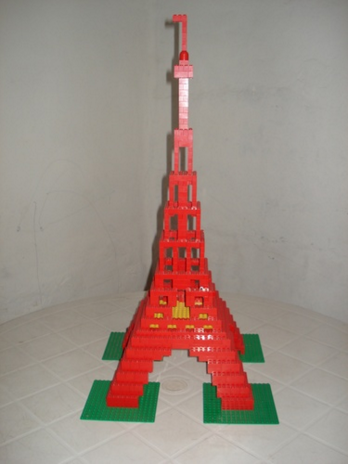
Lego Eiffel Tower
Now that we've had a chance to explore the concept of building polychord voicings, and to learn a basic vocabulary of polychords for practical purposes, it's time to put all of this great knowledge to use and to begin to realize chord progressions.
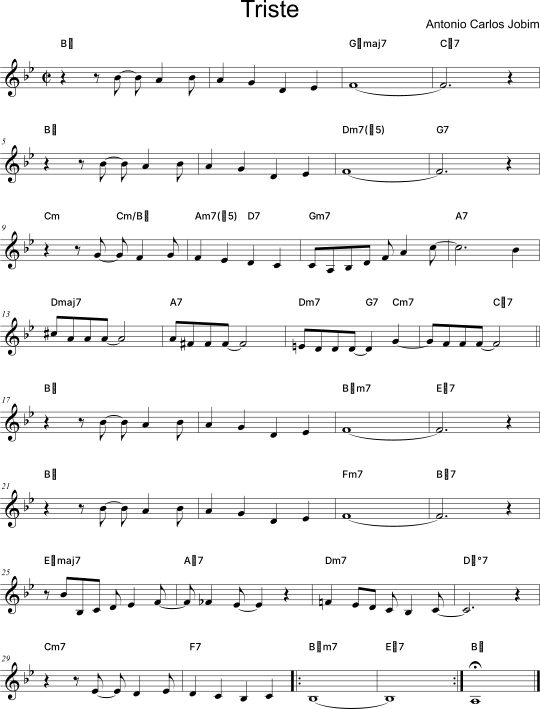
In this topic we'll work out polychord keyboard voicings for the tune "Triste" by the Brazilian composer Antonio Carlos Jobim.
Listen to the audio file as you follow the lead sheet. The piano part in the arrangement has been created using polychord voicing technique. We'll go through the process used to create this layer for the first half of the arrangement and then later you'll have the opportunity to work through the second half on your own as the workshop for this topic.
Lead Sheet for "Triste":
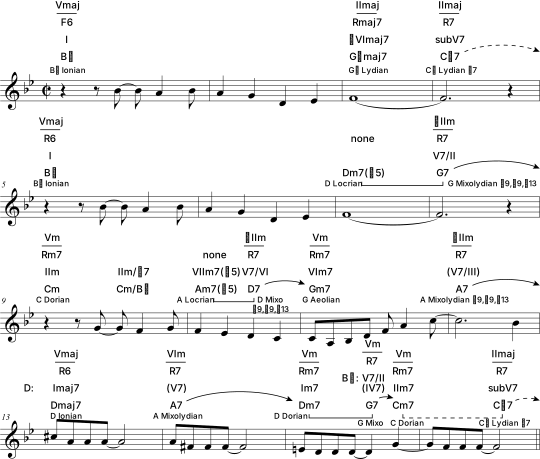
"Triste” Harmonic Analysis
As we investigate the lead sheet, the first thing that we need to do is to analyze the chord progression. Analysis is essential so that we know which chord scales we're working with. The chord scales will lead us to choose specific upper structures for our polychords, and those voicings will help us to define clearly the direction of the chord progression for those who listen to our arrangement. Here's a harmonic analysis for half of the tune, mm.1-16. Notice the pivot modulation that occurs from mm.12-13. The V7/III changes function to become the V7 in D major. The change of key is brief, as the tonic modal interchange chord I-7 becomes the related II in a sequence that will return to tonic in B
Harmonic Analysis of First 16 Bars:
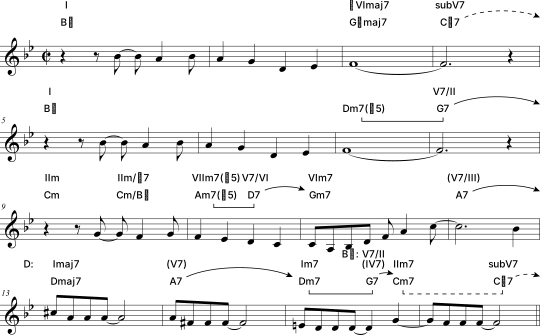
Once we have analyzed the chord progression, let's take the time to identify the chord scales associated with each harmonic function.
Analysis and Chord Scales:
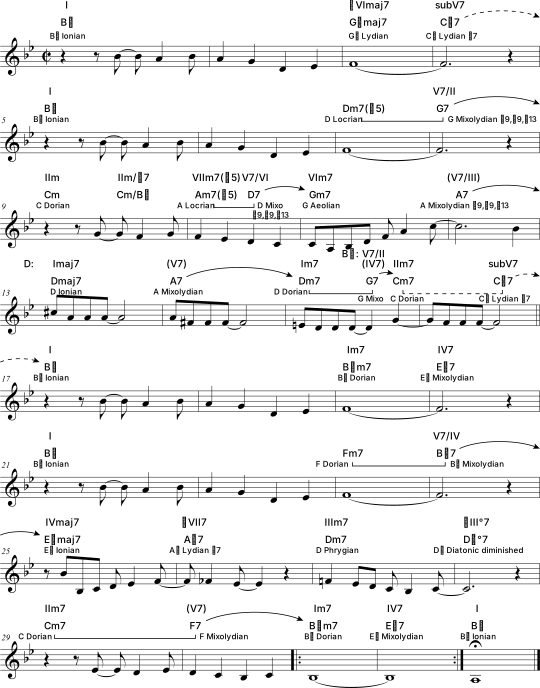
Polychord Formulas of "Triste"
Now that we have analyzed and thought about the chord scales, let's turn to our vocabulary of polychord formulas to help us to choose appropriate voicings.
Polychord Formula |
Resulting Chord |
Chord Scale |
Vmaj |
Maj7(9) |
Ionian |
Vmaj |
Maj7(9) |
Ionian |
IImaj |
Maj7(9, |
Lydian |
V- |
min7(9) |
Dorian or Aeolian |
|
min7(9,11) |
Dorian or Aeolian |
VI- |
Dom7(13) |
Mixolydian |
V- |
Dom7(9) |
Mixolydian |
|
Dom7( |
Mixo ( |
|
Dom7( |
Mixo ( |
|
Dom7 |
Altered Dominant |
VImaj |
Dom7( |
Symmetric Dominant |
IImaj |
Dom7(9, |
Lydian |
Please be aware that the use of Roman numerals in these formulas is not for purposes of harmonic analysis but rather as shorthand to note the intervallic relationship between the root of the lower structure and the root of the upper structure triad. In these formulas, the Roman numerals do not relate to the key of the tune!
Based on our analysis of function, chord quality, and chord scale, we have chosen the following polychords to express the harmony.
Analysis with Projected Polychords:
In mm. 1-2 and 5-6, the tonic chord may be expressed as Vmaj over R6. This will give us a maj7(9,13) voicing. We can also use this same formula in m. 13, when Dmaj7 is the tonic chord for a measure or two. Vmaj over R6 is a good way to express the tonic I chord. It may also be used for any maj7 chord.
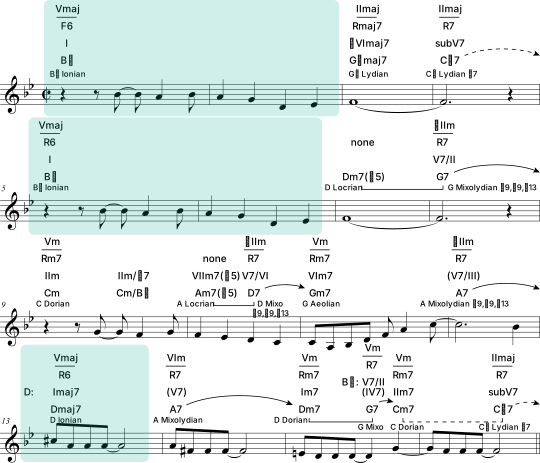
M. 3 is a modal interchange chord (
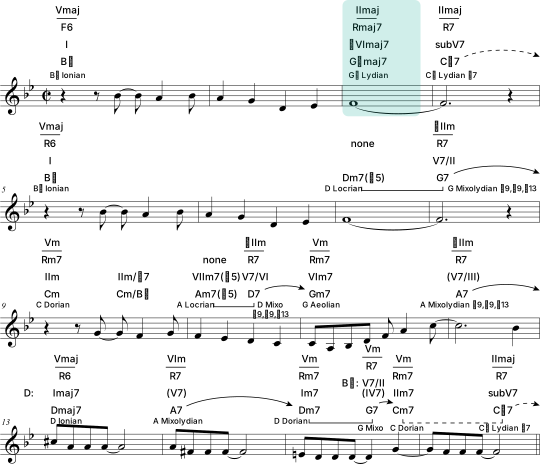
For the subV in m. 4 we'll also use a IImaj as the upper structure over R7. This will give us a Dom7(9,
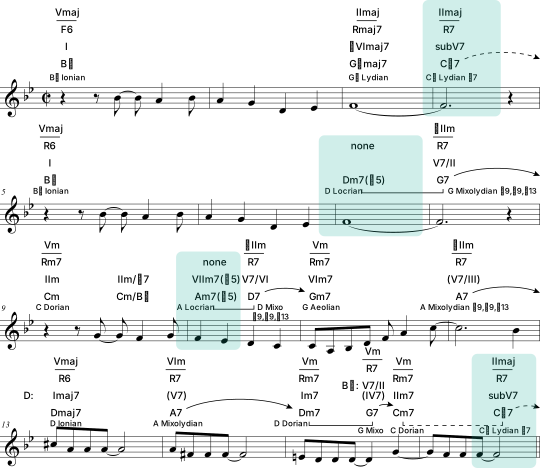
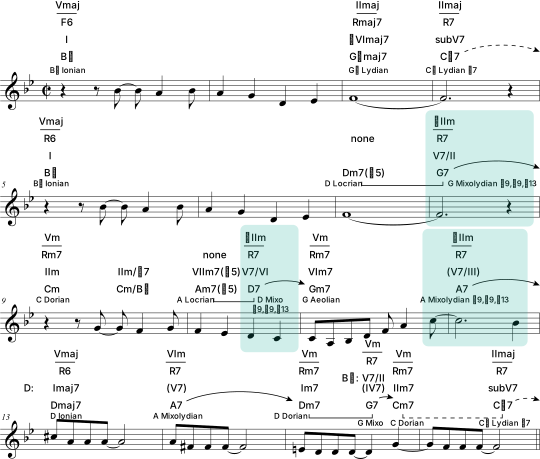
There are a number of different upper structures that we could use for the V/II in m. 8. Let's make a note that we'll use
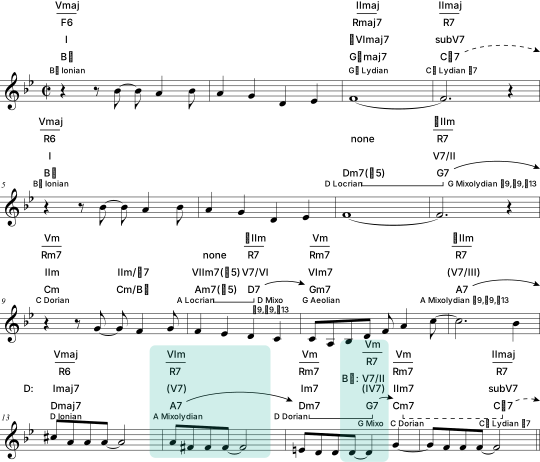
In m. 14 the A7 chord is V7 in D. Its chord scale is Mixo, so let's use VI- over R7 for this voicing. The same voicing is appropriate for the G7 chord on beat 3 of m. 15. VI- over R7 gives us a Dom7(13) chord.
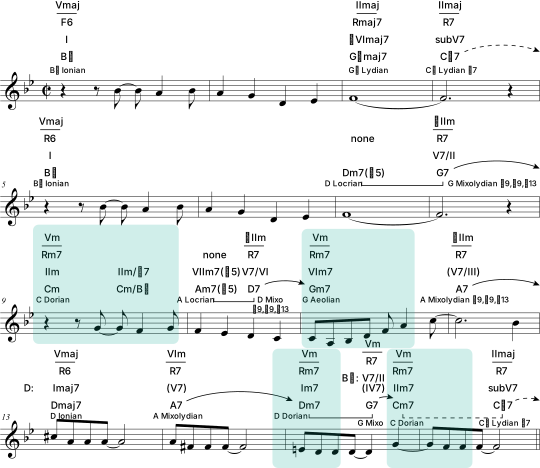
So what's left? From mm. 9-16 the remaining chords are all min7 in quality and have T9 as an available tension. Let's use V- over R-7 for each of these voicings. This will give us a min7(9) voicing each time.
Download "Triste" with Projected Polychord Voicings (PDF)
Now let's look at a version of the chart with chord symbols that show the polychord voicings.
"Triste" with Polychord Symbols:
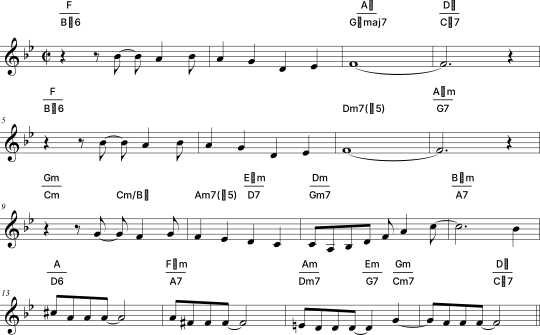
Lower and Upper Structure Voiceleading of "Triste"
We're ready to get started voicing the chords! First put the lower structure in place, voice leading the guide tones as you would in a three-voice texture: roots in the bass, moving the guide tones according to their scale tone tendencies. If it is advantageous to move a voicing up so that the guide tones don't exceed low interval limits, break at the end of a phrase (see mm. 4-5).
"Triste" Lower Structure Voiceleading:
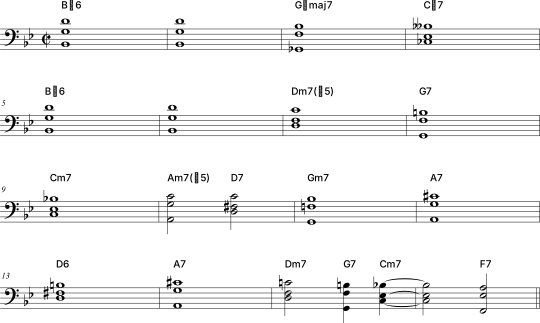
Download "Triste" Lower Structure Voiceleading (PDF)
This three-voice realization of the changes is enough to carry the chord progression, but when we add the upper structure triads we'll get richer, more exciting harmonic colors!
Upper Structure
As we voice the upper structure, we apply the same principles of smooth voice leading, creating as much step-wise motion or common-tone connection as possible. When voicing the treble for the min7
"Triste" Upper Structure Voice Leading:
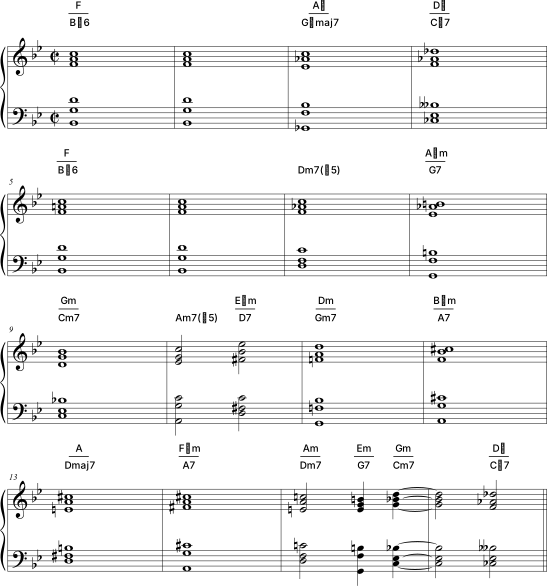
Adding the Piano Part of "Triste"
OK, now its time to add this piano part to the arrangement!
"Triste" Arrangement with Polychords:
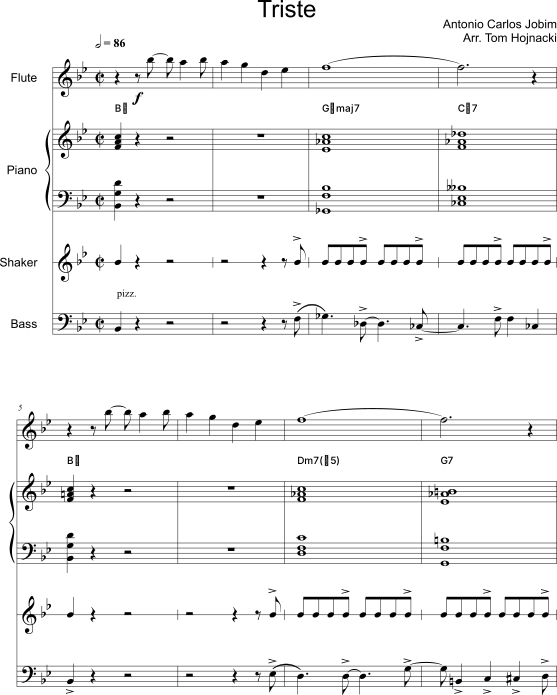
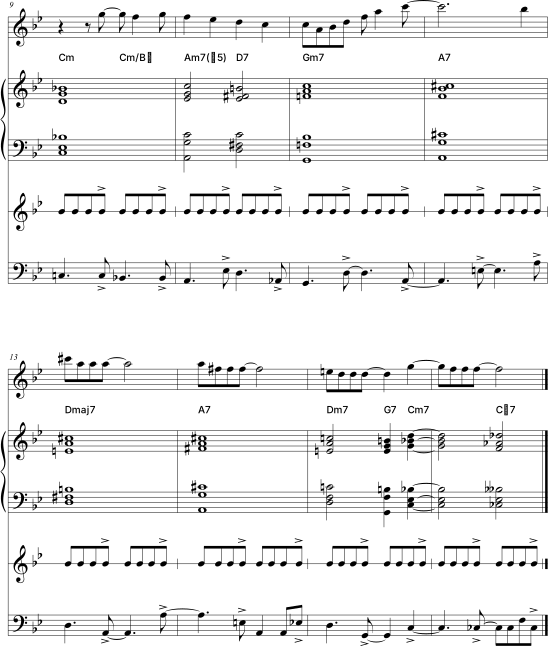
Download "Triste" Arrangement with Polychords (PDF)
It's starting to sound pretty sweet! You may notice that the keyboard parts in straight whole-, half-, and quarter-note values don't sync up with the anticipations in the melody and the bass part. We need to activate the rhythm with a little syncopation so that all of the parts in the rhythm section are locked in together!
Like so:
"Triste" with Polychords Rhythmically Syncopated:
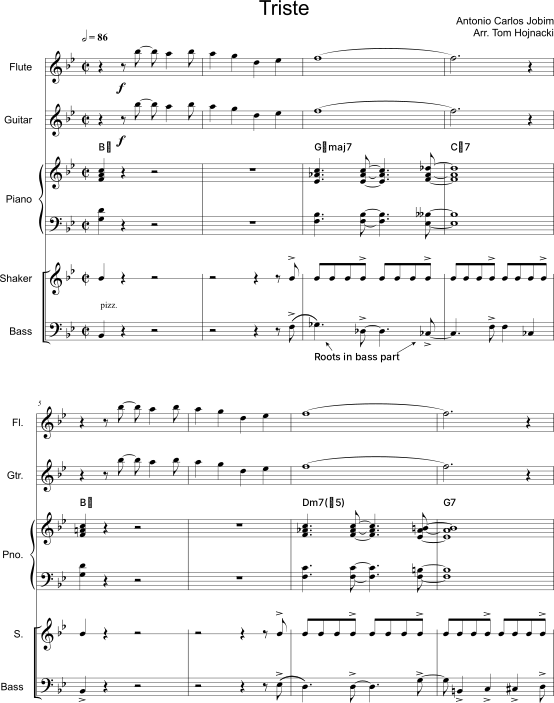
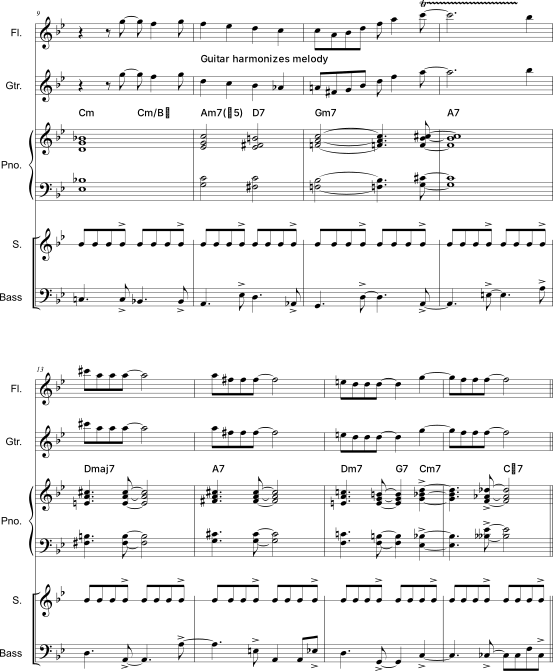
Download "Triste" with Polychords Rhythmically Syncopated (PDF)
We're sure you'll agree that the band sounds a lot better now that the piano player is playing inside the groove! Let's just make a couple more adjustments. First off, we'll remove the roots from all of the piano voicings, leaving just the guide tones in the left hand of the piano part. This will allow the bass part to come through more clearly. These notes in the piano part are redundant because the roots of each of the chords occur at all of the crucial moments in the bass line.
Making Final Adjustments to Polychord Voicings of “Triste”
Next, let's play around with the position of the upper structure triads a little bit. This will create a bit of counter melody to the flute part, particularly while the flute is holding a long note. And lastly, let's change up some of the upper structure triads on the minor and dominant chords for variety.You'll notice that we have used both V- and
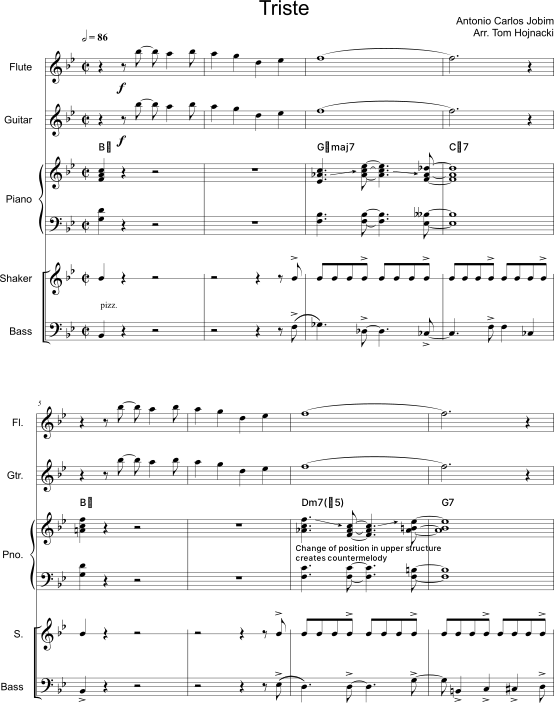
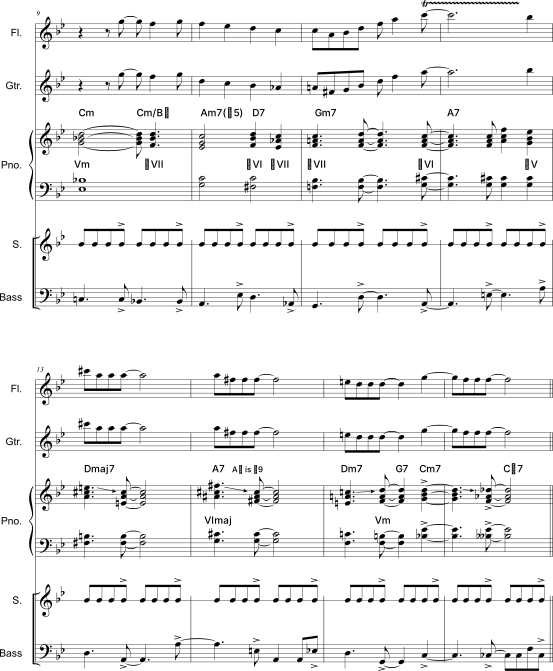
Download "Triste" with Final Adjustments to Polychord Voicings (PDF)
Workshop: "Triste," Second Part Analysis
Now it's your turn!
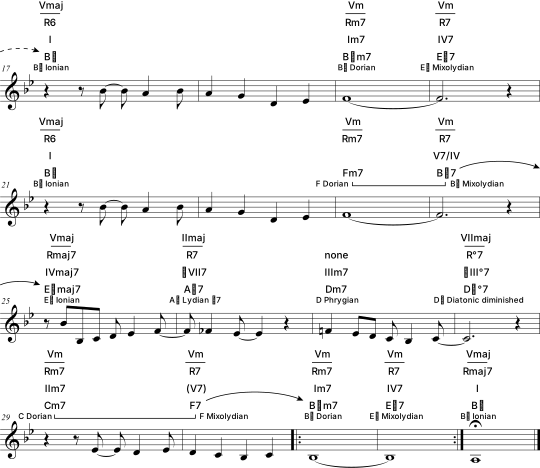
Analyze the second half of Jobim's "Triste" (mm. 17-32). Use the process outlined in the Polychords topic to create a piano part using polychord voicings to complete the second half of the arrangement. Check your solutions against the PDFs of the full analysis and full score of the arrangement.
Download Triste Lead Sheet (PDF)
Mountains Rising: The Contemporary Classical Concept of Extended Chords

Mountain Peaks
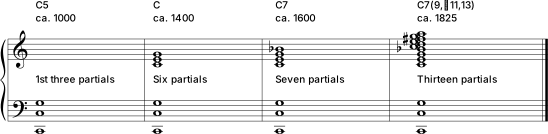
If we look back at the development of Western harmony from our twenty-first-century perspective, we can see a clear trend. The earliest written music used primarily perfect octaves, 5ths and 4ths in its harmonies. Next, major and minor thirds were added and major and minor chords became the standard harmonic foundation. Around 1600, 7th chords started to become an accepted harmonic element. In the nineteenth century, composers began to incorporate 9th, 11th, and 13th chords into their compositions. The harmonic development of Western music has mimicked the expansion of the harmonic series. As the harmonic series expands beyond the 13th partial, the note names begin to repeat. However, since the notes in a natural harmonic series are not the same as those of a tempered scale, the intervals become smaller and smaller. So, perhaps the next development in Western music will be microtonal music. Some twentieth- and twenty-first-century composers have been experimenting with microtones in their music, but it has not gained broad public acceptance. The computer has made it relatively easy to create microtonal music, although most people's ears are unable to differentiate the subtle changes in pitch. And, the tempered 12 notes to the octave scale has become ingrained in our world musical culture, so microtonal music, many say, sounds out of tune.
Extended Chords in the Classical Period
Development of Western Harmony Compared to the Harmonic Series:
Beethoven's Symphony No. 3, The Eroica
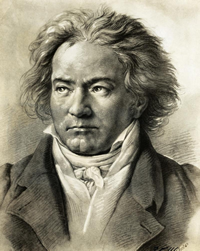
Ludwig Van Beethoven
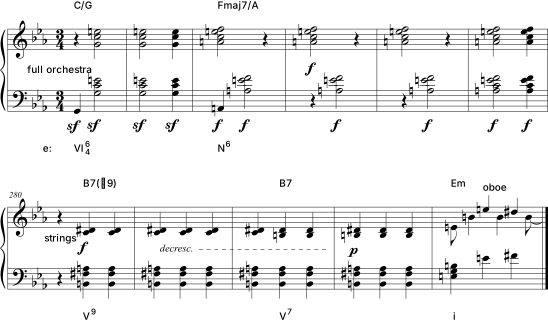
Towards the end of the classical period (1750-1825), composers began to use the 9th as a chord tone. Beethoven (1770-1827), with his fiery music that featured huge dynamic contrasts, utilized the V7(
Beethoven's Use of the 9th Chord in Symphony No. 3:
Extended Chords in the Romantic Period
Schumann's "Scheherazade"
In the Romantic period (1825-1900) composers sought richer and more evocative harmonies, with 9th, 11th, and 13th chords beginning to be heard more often. But most often they were still treated as dissonances, and although held for longer durations and heard together, they usually resolved to their expected targets.
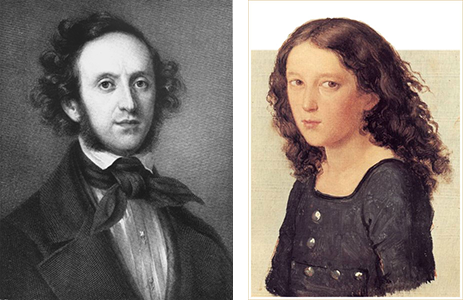
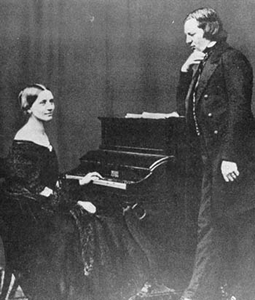 Robert Schumann and his wife Clara, who was also a fine composer and pianist. |
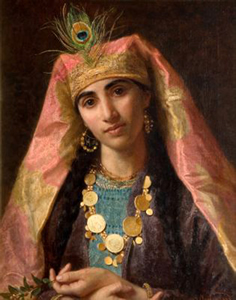 Scheherazade |
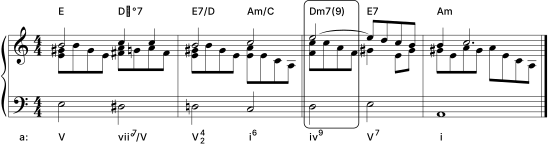
The next example is an excerpt from Robert Schumann's (1810-1856) "Scheherazade" from his Album für die Jugend, Op. 69, a compilation of 43 short works written for his daughters. The piece has a iv9 chord in which the 9th (E) is treated as an integral part of the chord. The 9th chord adds a mildly exotic flavor to this piece depicting Scheherazade, a queen and the storyteller of the famous Persian book of folk tales One Thousand and One Nights. The 9th (E) of the D-7(9) chord dissolves into the E7 chord, becoming its root. As you can see from the classical-style Roman numeral analysis, although the 9th chord also has a 7th, the number 7 left out and only the highest chord member (9) is indicated. This practice is different than modern chord symbols and modern Roman numeral analysis in which all of the tensions are usually indicated.
9th Chord in Schumann's "Scheherazade":
Mendelssohn's "Song Without Words"
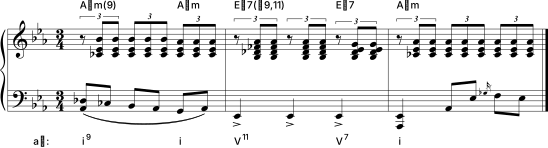
The 11th chord was not commonly used in classical music because the 11th is the same note as the 4th of a chord and was almost always treated as a suspension. As in contemporary music, when the 11th is present, the 3rd of a major chord is omitted. In the example below, Felix Mendelssohn (1809-1847), a child prodigy and prolific composer, in his "Song Without Words," includes an E
Mendelssohn's "Song Without Words" Excerpt with an E
Strauss' "Blue Danube Waltz"
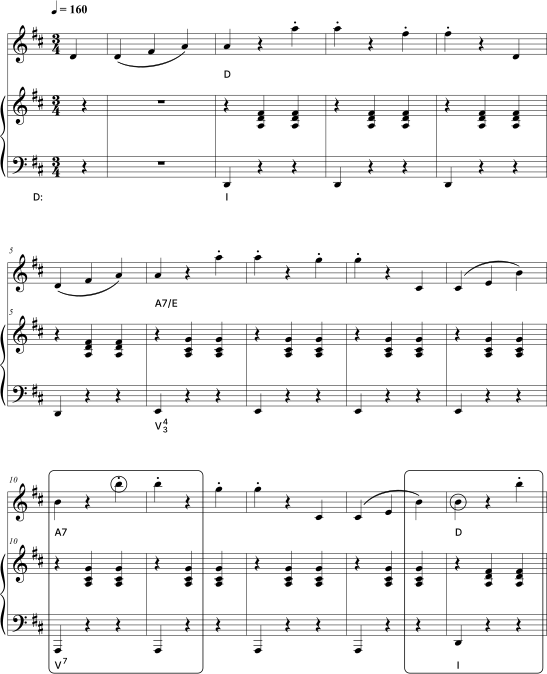
In lesson 6, Johann Strauss' "Blue Danube Waltz" was used as an example of unresolved 9ths and 13ths. Those notes could be thought of as integral parts of the chords rather than as melody notes. In that case the chords could be understood as 9th chords and 13th chords. Our modern ears probably hear them that way.
9th and 13th Chords in Strauss' "Blue Danube Waltz":
Extended Chords in the Impressionist Period
By the Impressionist period (1875-1925), composers were unambiguously writing music that featured 9th, 11th, and 13th chords where the classical non-harmonic tones did not resolve and were clearly part of the chord. French composer Maurice Ravel (1875-1937), along with Claude Debussy, was one of the major composers of Impressionist music. Ravel was also a master orchestrator, and his orchestration of Modest Mussorgky's "Pictures at an Exhibition" still remains as one of Western classical music's major achievements.
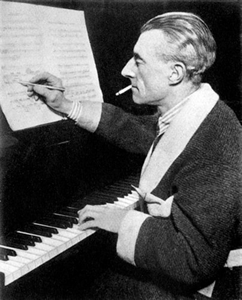
Maurice Ravel
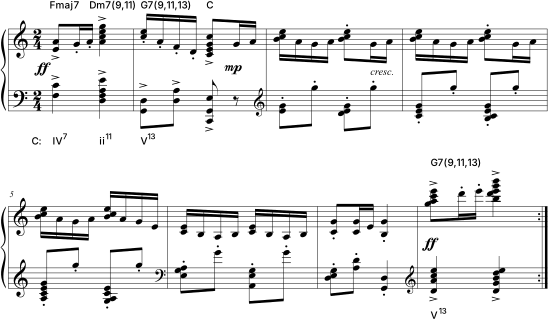
The following example is an excerpt of Ravel's "Rigaudon" from Le Tombeau de Couperin, an orchestra version of his suite for piano. The composition opens unambiguously with an 11th and 13th chord.
"Rigaudon" from Ravel's Le Tombeau de Couperin:
William Schuman’s "Three Score Set"
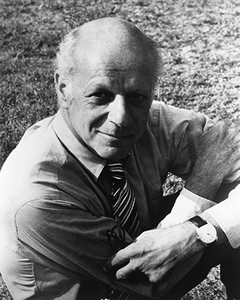
William Schuman
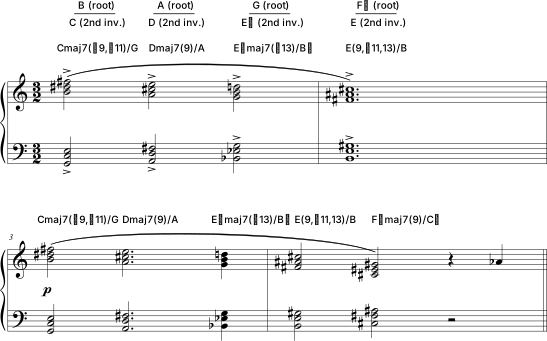
All of the examples we have studied up to this point have been examples of tonal harmony—that is, major and minor key harmony that is built around a tonic note and that can be understood in a key. In the twentieth century, composers began to experiment and write music that wasn't clearly in any one key. Some of this music still used tertian harmony—harmony based on chords built in thirds. American composer William Schuman's (1910-1992) "Three Score Set" utilizes chords built in thirds, but without a clear tonal center. Most of the chords in opening measures of "Three Score Set" are "tall chords"—triads with upper structures of various 9ths, 11ths, and 13ths. They can also be thought of as two triads acting independently. This example gives you a taste of mid-twentieth-century harmonic explorations and how composers pushed the limits of harmony built in thirds. As the common-practice classical music of the Baroque period through the Romantic period moves into the twentieth century, the harmonies break away from the traditional tonal practices and traditional Roman numeral analysis doesn't explain the music very well. When we fully enter this new musical world in Music Theory and Composition 4, we will no longer use Roman numeral analysis and we will utilize other ways to describe and analyze the music. The music in "Three Score Set" is no longer tonal in the traditional sense, so no Roman numerals are used for analysis.
An Excerpt from William Schuman's "Three Score Set":
Workshop: Classical Analysis
This workshop is in two parts:
1. Analyze the following excerpt, putting chord symbols and contemporary Roman numerals above the staff and classical style Roman numerals below the staff. You will see that the traditional Roman numerals no longer provide as much information as do the contemporary Roman numerals.
Download Classical Analysis Workshop (PDF)
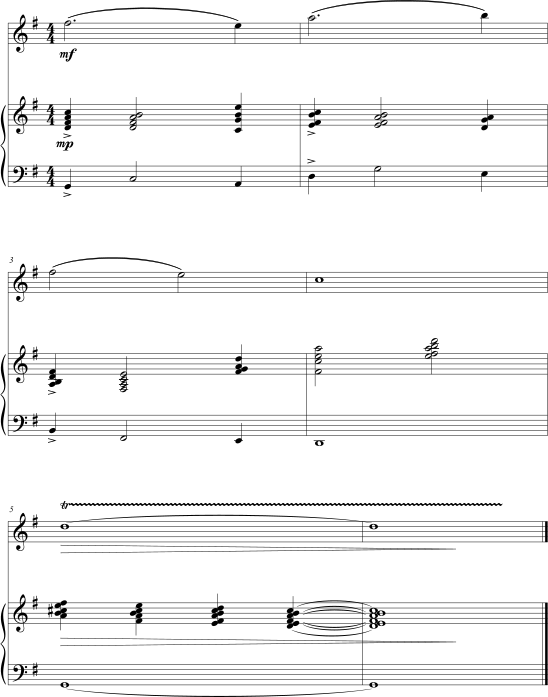
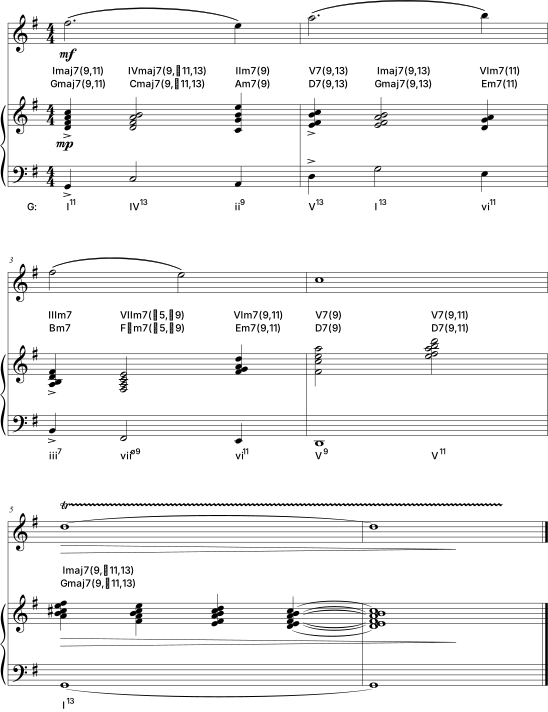
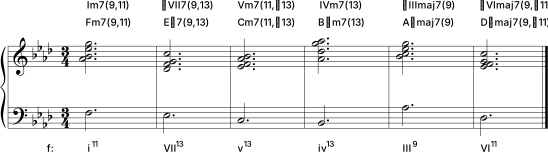
2. Add 9ths, 11ths, and 13ths to the progression given below to create a progression with "tall chords." Put chords symbols and contemporary Roman numerals above the staff and adjust the traditional Roman numerals below the staff to complete your analysis. Attach a copy of your score and sound file.
Download "Tall Chords" Practice (PDF)
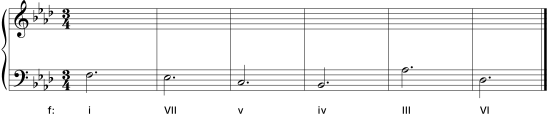
There are many possible ways to complete this exercise. Below is one possible answer.
Composers on Composing: Form's Influence on Composition
This week, in lesson 7, three more composers share their thoughts on composition.
The question posed to this week's composers is: How does form influence your composition?
Composers interviewed in Week 7:
Julius Williams—Contemporary classical music composer and conductor
Sheldon Mirowitz—Film and television composer
Susan Cattaneo—Songwriter and recording artist
Recap
In lesson 7 you have learned how to:
understand the concept of upper structure triads, and derive upper structure triads from chord scales
use upper structure triads to create extended chord voicings
recall a basic vocabulary of polychord voicings for use in realizing chord progressions
understand the concept of "tall" chords involving the 9th, 11th, and 13th in the context of nineteenth- and twentieth-century classical music
understand and comment on how a selection of professional composers use polychords and extended tertian harmonies
Next week we will be diving deeper into modulation by looking at Pivot, Direct, and Transitional Modulation techniques.